
This was the submission we made on 10 July 2025 to the Australian Law Reform Commission’s review of the ‘future acts regime’.
About Jigsaw Legal Pty Ltd
I am the Director and Principal Lawyer at Jigsaw Legal Pty Ltd. I am a lawyer who has worked in native title and Aboriginal cultural heritage for almost 20 years, primarily in Queensland. I have held senior positions in private practice, in-house in an energy company, as Assistant Crown Solicitor for the Native Title and Resources team at Crown Law, and as In-house Counsel at the National Native Title Tribunal. I established Jigsaw Legal Pty Ltd in 2024 as a boutique native title and cultural heritage practice.
Scope of this submission
Time and capacity constraints prevent me from commenting on all of the questions raised in the ALRC’s Discussion Paper of May 2025. I have limited my comments to:
(a) general comments; and
(b) the impact-based future acts model.
General comments
I support the comments made by others and summarised by the ALRC that the future acts system is in need of reform. It was conceived in a vastly different landscape, when native title was a new legal concept which governments and proponents were grappling with. In 2025, governments and proponents are comfortable with the concept of a future act and many enter into voluntary agreements with native title parties to meet their own objectives of corporate social responsibility. The time is right for a more practical, straightforward and fair future acts regime.
Impact based future acts model – loss of rights where acts currently require an ILUA
I agree with the Discussion Paper that an impacts-based future acts regime has the best likelihood of ensuring that procedural rights are somewhat proportional to the impact on native title rights and interests. However, I have some comments on the details of this proposal.
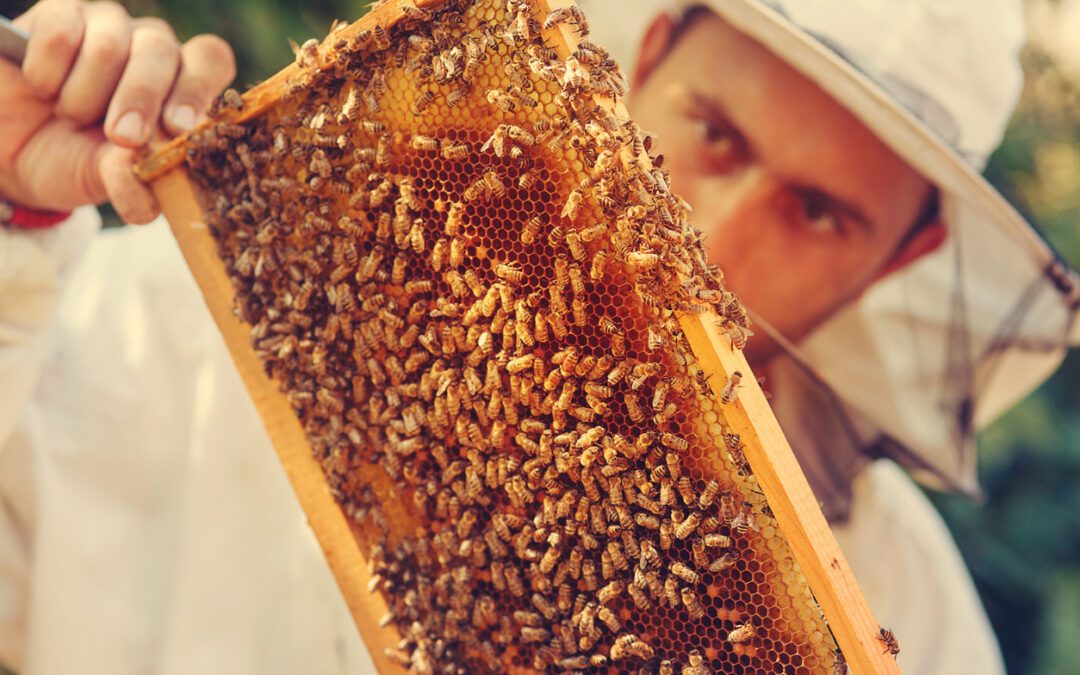
Under the current regime, if a future act does not fit within one of the s 24 categories, the only option for ensuring validity is to obtain an Indigenous Land Use Agreement (ILUA). This leads to a curious result where the future act is one with a very minor impact on native title – for example, an act that would otherwise fit the description of a ‘low impact future act’ under s 24LA but is unable to be done pursuant to that section because there has been a native title determination (as s 24LA only applies before there has been a native title determination). The explanatory memorandum gave the example of a beekeeping licence as something that could fit within s 24LA; it was intended to cover an act which was quite minor and/or ephemeral.
The impact-based model would cure this, because it would be exhaustive of the types of future acts: either an act is category A, requiring the right to consultation, or category B, requiring the right to negotiate. In theory, I support the model.
Importantly, however, this would result in fewer rights for native title parties in relation to those future acts for which there is currently no option other than an ILUA. This may be acceptable from a policy perspective if it relates to a truly low impact future act such as the grant of a beekeeping licence. According to an impacts-based model, it makes sense that the right to consultation is afforded but no ILUA is required.
However, there are more significant future acts which currently require an ILUA because they ‘fall through the cracks’ of the s 24 categories. An example is the addition of a purpose relating to the production of energy from a renewable source into a lease under the Land Act 1994 (Qld). This is becoming more common as the renewable energy industry ramps up. In most cases, this future act would currently require an ILUA. Under the impact-based model, it would presumably be a category B future act and subject to the right to negotiate.
To ensure that native title parties do not lose rights they currently enjoy, the ALRC may wish to give some thought to a third category of future act, in addition to category A and category B, which requires an ILUA. I would suggest that this includes some of the high-impact future acts which currently require an ILUA.
Impacts based future acts model – definition of categories
The other concern I have with the impacts-based proposal as described in the ALRC paper is how the two categories are defined. If the legislation were to adopt the categories in paragraph 157 of the paper, I worry that the terms used are too subjective and ill-defined. For example, in the description of a Category A act, the following terms seem to be open to interpretation:
(a) ‘small scale’;
(b) ‘discrete and limited’;
(c) ‘low or no physical impact’ (this one is probably easier to determine objectively);
(d) ‘temporary or short duration’; and
(e) ‘substantially impact’.
To apply these terms to the example given in Appendix A, I was surprised to read that that a 20 m jetty might be classified as ‘small scale’, ‘discrete and limited’ or that a 3 year term is of ‘temporary or short duration’. I imagine something that is ‘small scale’, ‘discrete and limited’ or of ‘temporary or short duration’ as something which is truly limited in its size, time or impact, such as the grant of a licence to hold a music festival for 3 days (or, dare I say, the grant of a beekeeping licence).
While it runs the risk of creating a rigid set of conditions not unlike the current s 24 suite of future acts, I suggest that some of these terms be better defined. E.g. ‘temporary’ means less than 3 months.
I wholeheartedly support the abolition of the expedited procedure, but it would be a shame if the National Native Title Tribunal, newly freed from its role in determining expedited procedure objections, were to be overrun with requests to determine whether an act was Category A or Category B. Better definition of the two categories could avoid this.
Other comments
I agree with Proposal 10 that the Native Title Act 1993 (Qld) should be amended to clarify that compliance with the procedural requirements is necessary for future act validity.
None of the reforms suggested will be successful without a significant increase in funding for the sector, in particular, for PBCs and registered native title claimants.